Fight Club | The Inner Struggle | Ed Norton, Brad Pitt, Elena Bonham-Carter | Where is your Mind?

Fight club 2Fight club scene

Never mind what the psychologists might tell you, Fight Club is about breaking away from the matrix of consumerism and the programmed mind, it’s about finding out who you are. But you can see the movie, if you haven’t, and figure that out. (Some say the book is better. I haven’t read it yet) What I want to discuss here is the song that is played during the end credits: Where is my mind? by The Pixies. Check the lyrics:

Where is My Mind? by The Pixies
Ooooooh – stop

With your feet on the air and your head on the ground
Try this trick and spin it, yeah
Your head’ll collapse
If there’s nothing in it
And you’ll ask yourself

Where is my mind [3x]

Way out in the water
See it swimmin’

I was swimmin’ in the Carribean
Animals were hiding behind the rocks
Except for little fish
when they told me, east is west
Trying to talk to me, coy koy

Where is my mind [3x]

Way out in the water
See it swimmin’ ?

With your feet on the air and your head on the ground
Try this trick and spin it, yeah
Your head’ll collapse
If there’s nothing in it
And you’ll ask yourself

Where is my mind [3x]

Ooooh
With your feet on the air and your head on the ground
Ooooh
Try this trick and spin it, yeah
Ooooh
Ooooh

We can ask this question trying to figure out the mind’s actual location. (Is it in the brain?) Or we can ask it trying to figure out why is it running away in senseless wanderings. (Where is it going?) Either way, it is an excellent question to ask in many instances. Where is my mind? Another good question is: Who am I? We should find out. Don’t you think?

You can watch the movie here, free! FIGHT CLUB Full Movie – Funny Videos at Videobash

9/11 Truth Rising | Unstoppable | Satyagraha

Grafitti 9:11

http://youtu.be/0Ew8dglFxDo

“This video documents the struggle of local activists who used the medium of graffiti to effectively (and cheaply) bring the message of 9/11 TRUTH to the masses, while risking jail time and even death in the process. As the authorities scrambled to cover up each incident, the activists responded by placing their work in increasingly difficult locations. Still, almost everything you see in this video has now been painted over or removed. But due to the hard work and relentless dedication of the activists, the public’s interest was raised and that is something that is not so easily undone. The news report that was generated in direct response to the 9/11 TRUTH graffiti can be seen here:

http://youtu.be/DmYPv46X354

“The 9/11 Truth movement is, and must be, the heart of a growing global  ‘Truth Force’  – Satyagraha – Initiated by Mahatma Gandhi on September 11, 1901.” –Barbara Honegger, “Behind the Smoke Curtain”

Civil disobedience is an imperative at times. 


The Eye of the Dragon | A Traveling Light

IMG_1192With Pamela Boehm / Lama Foundation

IMG_1183Pema, Joe and Megan / Lama Foundation

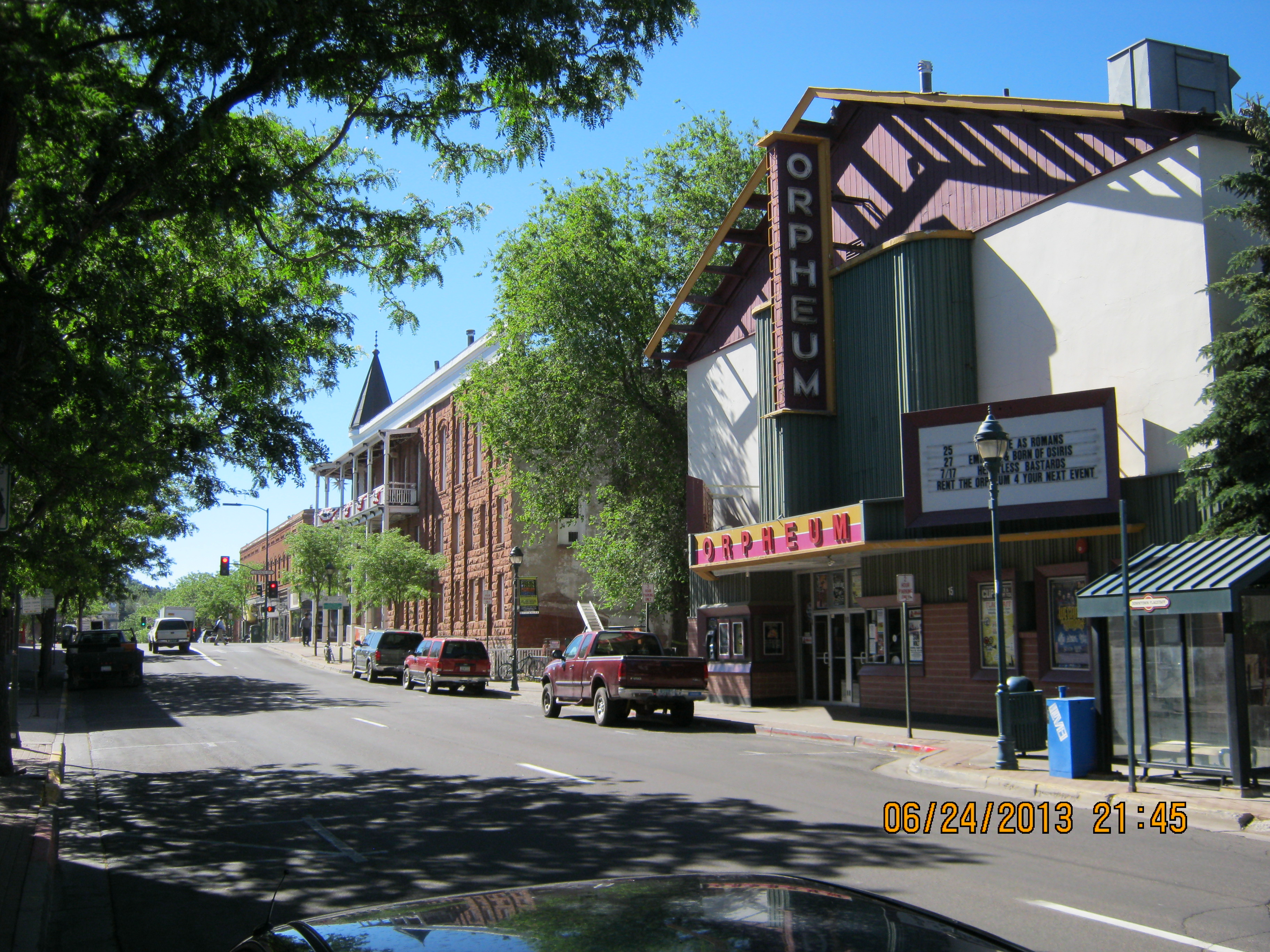
IMG_1150In Flagstaff with Kenna, Wheeler park

IMG_1153Downtown Flagstaff

IMG_1158Sunrise in Albuquerque / We find everything on the way

IMG_1161Downtown Albuquerque

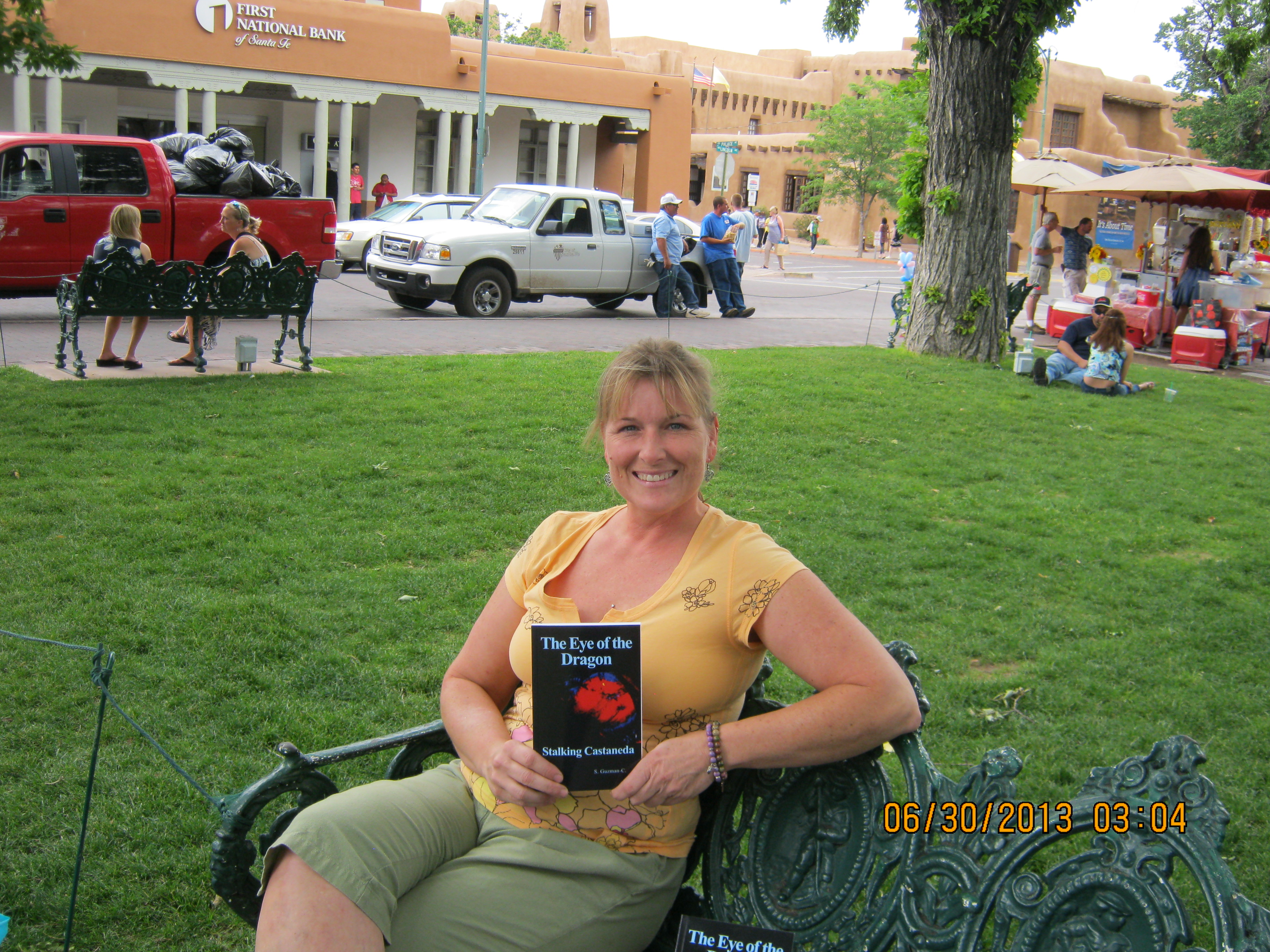
IMG_1175In Santa Fe, NM

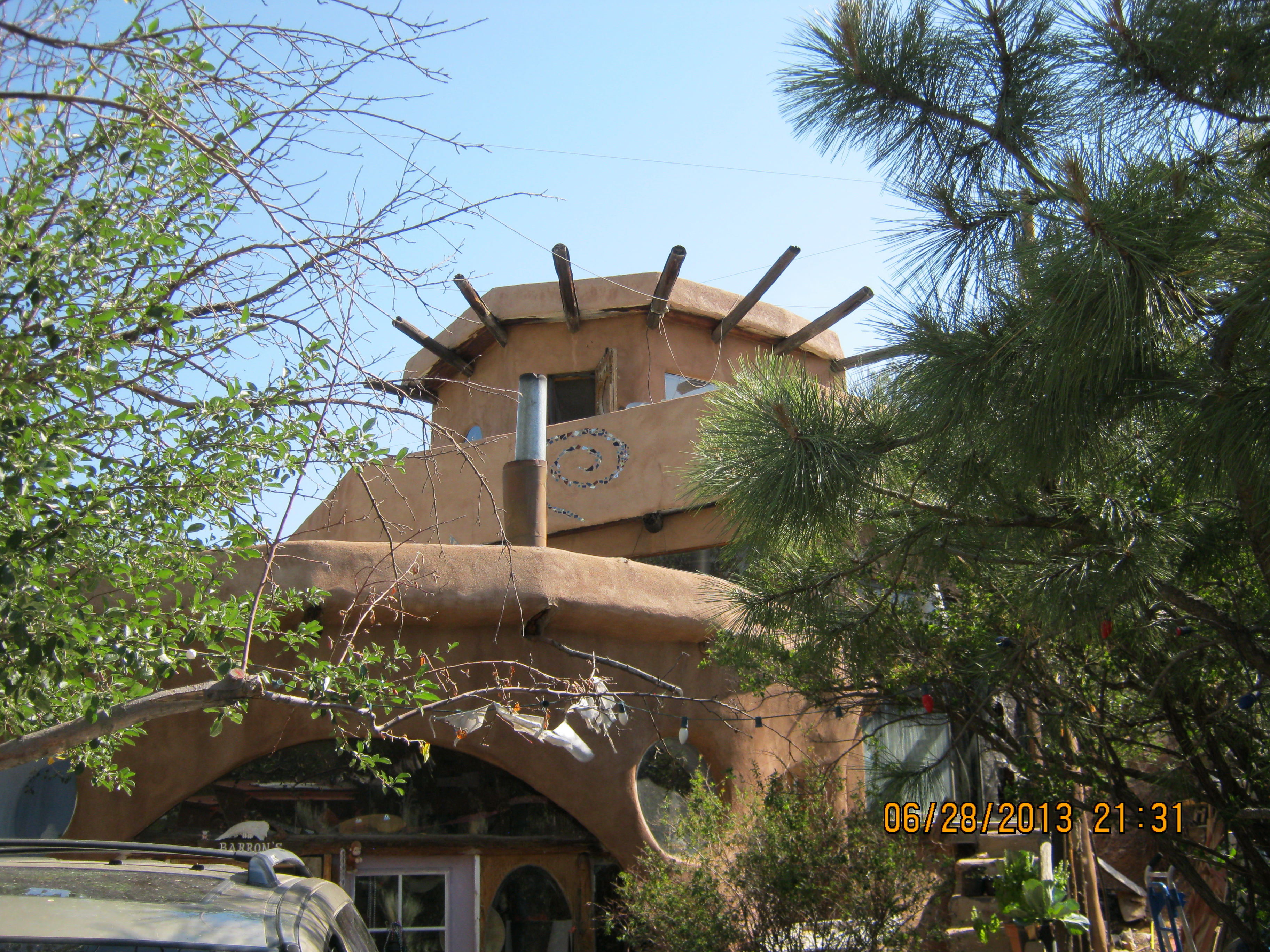
IMG_1172My friend Roark Barron’s House in Santa Fe

IMG_1174Roark Playing his harp at the plaza

IMG_1169Roark’s unique house. His Home page.

IMG_1176Sunset in Santa Fe

IMG_1201Hanuman Temple, Taos, NM

IMG_1204Saying goodbye to the Rio Grande

IMG_1211Santa Fe NM Spanish Crafts Fair

IMG_1220Tucson, AZ

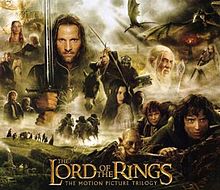
The Lord of the Rings | A Riddle | JRR Tolkien

Today, I have a riddle for you. I changed something in the poem below (from The Lord of the Rings trilogy) which slightly alters its meaning; it is a change for today’s world. It is a very small change, but it is there. Can you see it? And, can you see why it is timely? If you don’t like riddles, don’t bother.

The Ring


“All that is gold does not glitter,
Not all those who wander are lost;
The old that is strong does not wither,
Deep roots are not reached by the frost.

From the ashes a fire shall be woken,
A light from the shadows shall spring;
Renewed shall be blade that was broken,
The crownless again shall be kings.”

J.R.R. Tolkien

JRR Tolkien

9/11 Truth: Implications | New ebook | Amazon

9:11 Cover 3

Sooo . . . 9/11 Truth: Implications has been published through Amazon.com. It is a short ebook that goes right to the point. The price is not an issue; it is only 99 cents. You do need, however, some courage to face the facts, but remember, fear is not your friend; fear will render you a victim. So check it out, and download it.

https://www.amazon.com/author/sguzmanc

Besides, there is nothing to lose; our youth is already fighting  and dying for the pleasure and wealth of a few sociopaths. “May the odds be ever in their favor.”

Amy Goodman | Democracy Now! | Anybody knows what’s wrong? | The Silenced Majority

Amy_GoodmanSilence can be deafening

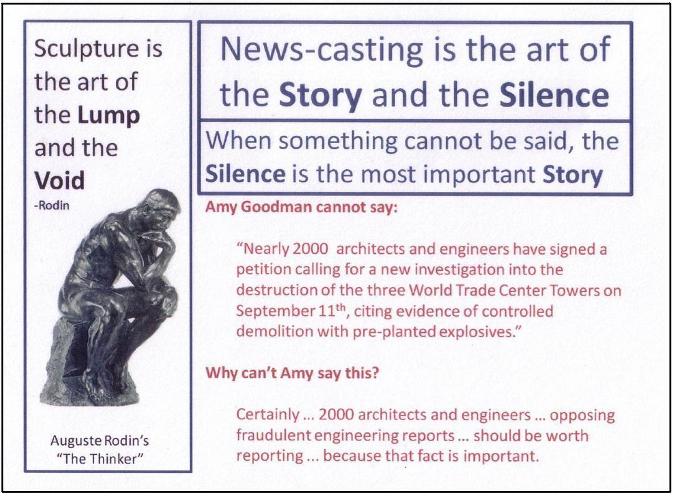
I used to be a fan of Amy Goodman but her silence (regarding  the evidence proving that 9/11 was an inside job) is inexplicable. Is she becoming a part of the silenced majority? In her case, being who she is, her silence is deafening. Isn’t the evidence found enough for her? There is much evidence here: AE 9/11 Truth

Amy what’s wrong? Anybody knows?

http://youtu.be/099BssyN_D4Goodman_poster

The Lord of the Rings | A Beautiful Song

The Lord of the Rings

I found this song at the end of the movie, The Return of the King (DVD). The song was played at the end while the closing credits were rolling. Annie Lennox (the singer) has a beautiful voice.  Here is: Into the West 

Lay Down
Your sweet and weary head
Night is falling
You have come 
to journey’s end
Sleep now
And dream of the ones
who came before
They are calling
From across 
The distant shore
Why do you weep?
What are these tears
upon your face?
Soon you will see
All of your fears
Will pass away
Safe in my arms
You’re only sleeping
What can you see
On the horizon?
Why do the white gulls
call?
Across the sea
A pale moon rises
The ships have come
To carry you home
And all will turn 
to silver glass.
A light on the water
All souls pass
Hope fades
into the world of night.
Through shadows falling
out of memory and time
Don’t say
we have come now to the end.
White shores are calling,
you and I will meet again.
And you’ll be here 
in my arm arms,
just sleeping.
What can you see
on the horizon?
Why do the white gulls 
call?
Across the sea
a pale moon rises.
The ships have come
to carry you home.
And all will turn
to silver glass.
A light on the water
Grey ships pass
Into the West


The Hunger Games | Almost Here?

Hunger GamesThe Hunger Games

The hunger games are already here: Our youth is being sent to war for the pleasure and profit of the corporate oligarchy.  9/11 Explosive Evidence – Experts Speak Out  But don’t put all the blame on them. Aren’t we guilty also? We have turn a blind eye to their doings for decades. We have been dehumanized. 

Hence, the revolution we need is not an armed revolution. We need to change our direction and develop inner sight to see that we are all branches of the same tree. We need to discover our link to the Spirit and become what human beings should be; we need to start caring. We don’t care.

The fact is that the corporate oligarchy has become what it is because we haven’t cared. We are as selfish and greedy as they are. And when we lose our virtue we are easy prey for vipers. We must change from within . . . evolve. Ours must be a revolution of conscience. Let’s care! Let’s return to sanity and oppose evil. Let’s do something!

But if you still want to turn a blind eye, “May the odds be ever in your favor.” You’ll need them.

Free Chapter | My Advisor is Death | The Eye of the Dragon

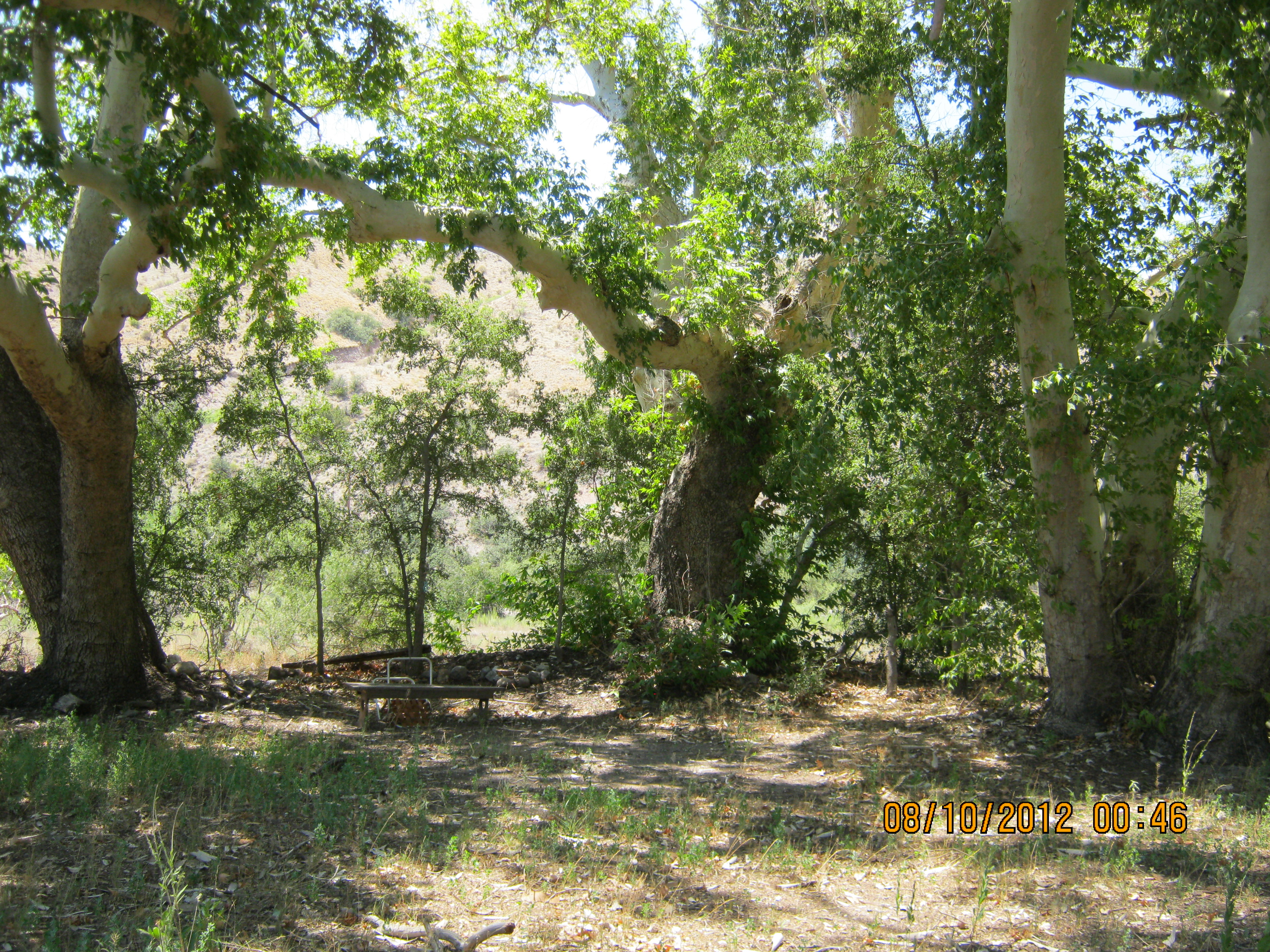
IMG_0777The Sacred Grove

My Advisor is Death

Well, let’s say that I know all kinds of things because I don’t have a personal history, and because I don’t feel more important than anything else, and because death is sitting with me right here. —Don Juan, Journey to Ixtlan

Awareness of death is the very bedrock of the path. Until you have developed this awareness, all other practices are obstructed.The Dalai Lama

My daily chores at the ranch are done, and, as I amble toward the tool shed, I catch myself immersed in nonsensical self-reflection. I stop the babble, put the tools in the shed and walk out. I cover our firewood with a tarp and sit on a tree stump, in the shade of a giant Sycamore. Sun rays slant downhill into the canyon promising a hot day. A mockingbird is singing. I inhale deeply the sweet smell of grass. 

An ant is carrying something somewhere. She is going far but she knows exactly where she is going. I stand up and follow her  until she reaches an anthill where she deposits her load. She moves around, greeting other ants, and either she or another ant (Who knows?) picks the load again and enters the underground city.

I return to the stump and notice the grapevines beside my cottage, opposite the tool shed. Most of the grapes are ripe, and I figure that I better harvest some before the deers and the birds dispatch them. I do so, and take some to my landladies. 

Then I pondered all I would have missed if I wouldn’t have stopped my useless self-reflection. What was I worrying about? Who knows? But it was either past, future or imaginary. The real meaning of the word freedom is liberation from compulsive thinking.

“If you did nothing during the whole of your hour but bring your heart back and place it again in Our Lord’s presence, though it went away every time you brought it back, your hour would be very well employed.”—St Francis de Sales

Self-reflection not only makes us absent, it also makes us prey for our death, for we forfeit the present moment, when death is always a possibility.

*  *  *

Using death as an advisor, as an usher to the present moment, is an old technique.  The sage Yudhisthira is asked: “Of all things in life, what is the most amazing?” Yudhisthira answers: 

       “That a man, seeing others die all around him, never thinks that he will die.”

*  *  *

An accident that occurred while I was still living in Seattle, helped me to see that the smallest of our decisions are made in the presence of death; it made the fact perfectly clear. I was leaving my apartment on my way to work, and as I locked the door there was a moment of hesitation. Had I left the stove on? I decided that I hadn’t, and left.

It was one of those rainy, wintry days Seattle is famous for. My apartment was located on First Hill, on the corner of Eighth Avenue and Spring Street. All the parking spaces in that area were metered, so I always parked by the cathedral, some eight blocks away. 

Buffeted by wind and a light rain, I turned left at the cathedral, and hastened along the lee of the building to where my car was parked. And just as I scurried into my car and was about to insert the key in the ignition, I heard a dreadful thud, a massive object had struck the sidewalk. I couldn’t see what it was due to the hedge growing along the outer half of the walkway, so spurred by great curiosity, I got off my car and ran over. 

Lo and behold! A huge cornice had been apparently dislodged by the wind and rain, and it wrecked the sidewalk just where I had been standing a few seconds before. I stood aghast. The distance from the fallen cornice to my car was about the same as the distance from my door to the kitchen and back. The decision not to check my stove had probably saved my life. Death had missed me by a few seconds.

Death as an advisor. We can’t feel important when consorting with our death. No matter who we are, or what we have, death can, and will, destroy us all with a flick of her wrist. That is certain; only when it will happen is uncertain. We must make our plans for the future while ready to die today.

*  *  *

Have you noticed that I consider death a female? I guess that that was what don Juan meant when he told Castaneda that the way we see our death is personal. I see my death as a female figure in a black, hooded cloak. She is rather cold, pale and impersonal but shapely and somehow appealing. I guess seeing her this way dulls the edge of my fright, and if I always use her as an advisor I presume soon there will be no fear at all. Who knows, she may even guide me through the eye of the dragon.

To keep death as an advisor, as a witness to everything we do, also requires effort in a sustained manner. Not only we have our own ego to contend with (the ego is a liar and the father of them) but our collective ego (social contract) is an impressive obstacle. The socialization process has been efficient at making us feel safe and eternal. It is an ongoing challenge, isn’t it? Everyday it starts anew.

*  *  *

I was in the park one afternoon, cleaning the interior of my car, while two birds cavorted in the sky in their daily rituals. Suddenly, I heard a bang right next to me; one of the birds had hit the car’s windowpane, apparently flying at full speed, and he was now lying on the ground. I picked him up tenderly, but it was useless; he lay on my hand writhing in convulsions,   dying. His skull was broken and bleeding. I ended his misery.

Next morning, this was in the news: Two men were walking near a construction site downtown, and a falling iron beam swung down on its tether to kill one of them instantly. The other man was in shock but otherwise unhurt. Death is always at arm’s length, to our left. Isn’t it amazing that we are still alive?

*  *  *

Late last evening, I took a stroll to the grove of sycamores, and again I caught myself thinking rubbish, worrying about future events—my future at the ranch is uncertain. I stopped my inner babble. I brought death into the picture, and death brought the present to my notice. 

It is cloudy. Birds are chirping aloft. I can hear the cooing of turtledoves in the distance. A light rain starts to fall through the shafts of light cast by the setting sun, but the trees protect me. I am amongst friends. 

Within the sacred grove, it starts to get dark, but around, in the surrounding terrain, there is still light. I can smell the rain. 

As darkness descends, the birds stop chirping. The forest to my left starts filling with the noises germane to the encroaching night. Insects start buzzing. Something is crawling through the thick undergrowth. Owls are hooting atop their high perches, chatting with each other. I hoot and they hoot back. 

The place is magical indeed, and it agrees with my death, the future doesn’t exist. All we have is the present moment, a fleeting instant, so fleeting that nothing really exists.

The Buddhist sage Nagarjuna said that things are so impermanent that there is no way to point at something and call it impermanent. The minute you single it out, it has become something else. All is energy in motion; there aren’t things in a flow; there is only flow. Birth and Death are always here, now. As you read these lines there are hundreds of people dying and hundreds of people being born. All of them, are us. 

Birth and death thus, do not exist; they are only part of a flow, of an interpretation, of an agreement. They are just items in a bubble of perception, in the illusion of consciousness, in the dream of life. Magic! What we perceive as the world is magic; we are magicians.

Nagarjuna also said that there is no difference at all between nirvana and samsara. They are not mutually exclusive. The world of form is a projection of Mind, and part of It. In Castaneda’s lingo, the dreamed dreams the dreamer. Thus, I dare say, the Tonal is a projection of the Nagual, of the Unborn, the Uncreated; they are not a true pair. And this is a dream that we can change, an agreement that we can modify. 

I strolled back to my cottage with the certainty that I have to stalk myself continually, especially in the mornings. The moment before totally waking is a vulnerable time for me. I am easy prey for self-reflection then, for to regain its hold on me the ego will unleash many a vengeful ghost from the past. That means that as soon as I am conscious, I must bring my attention to my breathing and my surroundings, to the moment, to who I am.

*  *  *

One night I went to the sacred grove taking a ladder and a rope with me; I meant to visit with my friends. For safety, I threw one end of the rope over the largest tree, and tethered the ladder to a branch on the opposite side. It was a long ladder that barely took me to the first branches of the tree. 

As I came near the branches, I found a sizable protuberance close to the main branch, a chair, so to speak, where I could sit. About a foot higher, the main branch forked out to stretch parallel to the ground; it forked again before meeting the neighboring tree, and one branch shoot up straight through our neighbor’s branches, while the other headed down and south toward the road and the hills.

Some of these branches (to give you an idea of the size of these trees) are as big as grown trees themselves; sitting astride one of them, you feel as if you are riding a horse. On the main branch, I placed a blanket; the chair felt slippery with the blanket, and it was too high to take chances. 

While sitting astride the branch, the trunk of the tree was my backrest; sitting on the chair, the branch was my backrest. I spent about four hours gazing into the moonlit night, altering my awareness, communing with the trees.  

To relieve aching muscles, I alternated between the chair and the branch. I would have stayed all night, enjoying the August full moon, but the threat of rain was in the air; thick, black clouds were rolling in, and there was thunder and lightning in them. 

But I returned.

*  *  *

Of all the trees, that one was the closest to me; it presented me once with a quartz crystal rock. It happened that one afternoon, when I was sitting by its roots, I had the urge to get some crystals to help me in dreaming, and I voiced my wish. A couple of days later, I found the quartz crystal rock within the hollow of the main root, right next to where I had been sitting. It could have been there all along, I know, but I sure hadn’t seen it before, and I gazed there frequently.   

Donna told me once that the tree growing amid the vegetable garden had appeared to her out of nowhere. It was just lying there, in front of the house, roots and all, soon after she wished for it.

*  *  *

During autumn the sycamores shed their leaves, and their foliage turns orange and yellowish-red, with a touch of gold and a hint of fire in the glowing colors. From the benches in the sacred grove, I can see the canopy above as a blend of greens and reddish-yellows. To the west, a few clouds are tinged orange underneath, and to the east, our neighbor’s sycamores are gleaming yellow against the fading blue of the darkening sky; it is the twilight during a warm November evening.

The energy vortex must have helped me that night, for I had the longest dream I have ever had. I awoke at about two o’clock in the morning and couldn’t get back to sleep. My time to leave the ranch was approaching; Donna and Jean couldn’t hire me any longer. I had decisions to make.

But I managed to relax. I grabbed one of my quartz crystals, pressed it between the index and middle fingers of my left hand, and, closing my eyes, I shut off my internal dialogue. I looked for the color orange. Different shapes appeared, shadows that moved and pulsed. I focused on them. I was facing the sacred grove, and I silently asked the distant trees to pull me toward them.

The next thing I knew, I was looking at a few stone buildings: a house and lesser constructions. I did not try to go through the vision but to hold it as long as I could. 

I was not able to visit the trees that night, I have to admit, but after that vision, I found myself inside a strange enclosure from where I couldn’t leave or even look outside; it had no doors, windows or roof. It was dark, obviously the darkness of the night, but I could not see any stars.

I intended to fly out but somehow I couldn’t. That was unusual, but I was reluctant to waste my dreaming energy trying to fly; I decided to go through the wall instead, something I had never tried before. I moved forward and went through the brick structure. It was a strange sensation, like going through jelly. I felt myself inside the wall for a moment, and then, I intended myself through it.

Outside, I found myself in an unknown city of strange appearance. I have a vague memory of structures and buildings with dome roofs, ending in slim needles as dark as the sky itself; they were unfamiliar and unrecognizable. 

There have been times when I had been unable to recollect a dream due to its outlandish contents. Only a fleeting memory remained, a memory of something that just didn’t make sense, for it was out of my normal range of perception.

I can’t remember how I changed the dream. But after I left I was able to fly, and I reached an altogether different region. It appeared to be a South American city in the mountains. I was moving close to the ground, trying to figure out my whereabouts. I started to look for signs that would perhaps give me a hint, but I couldn’t see any. I landed on a high narrow sidewalk and entered an unpretentious hotel with a cozy outdoor patio by the front desk.

There were no signs of any kind. It was probably a phantom city, but it didn’t cross my mind to intend seeing any of the few persons who were walking about oblivious to my presence. 

After I came out of the hotel, however, the dream changed again, and a pigeon landed close to me, behind a board attached to a chain-link fence. I could only see its tail, and it couldn’t see me. But it started to slowly climb down, so I figured that upon clearing the board and seeing me, it would take off flying. The pigeon, however, kept climbing down after looking right into my eyes. 

It occurred to me then that it wasn’t just a pigeon, whereupon I looked fixedly at the bird intending to see its energy. The pigeon turned then into a blob of energy; it became a circle with bright long filaments all around, and a blackish churning energy inside. It didn’t seem dangerous or threatening but it looked grotesque; I decided not to communicate or try to follow it to its realm. 

If it would have been as endearing as the blue scout, maybe I would have followed it; then again, maybe not, Castaneda’s blue scout turned out to be a hoax. The being whom he had supposedly rescued from the inorganic being’s world turned out to be P___ D___ born in Pasadena, California. 

Besides, following an inorganic being to a world you don’t understand, where your energy can be trapped indefinitely, did not seem to be an intelligent risk to take for any reason. Since trying to figure out what is fact and what is fiction in Castaneda’s work is quite a challenge, and considering that allies were of no help to him in vanquishing his self-importance, I guess I made the right decision.

*  *  *

A young woman was going through the front porch of the main house to knock at the door. As I glided toward her to greet her, I started to feel dizzy. She hadn’t seen me, and I didn’t want to yell and startle her, but the closer I got, the dizzier I got. I fought the fainting spell and woke up. 

I then closed my eyes and saw a huge house cat. He was almost as big as a full-grown German shepherd. As the cat came near, I could see that he had unusually large weird ears, like a rabbit. Allies can take the most outlandish shapes.

*  *  *

I found a heading, on the cover of a science magazine, which I thought interesting. It seems that scientists are getting close to the truth, at last. It read: You are a hologram.”

And I just read, in a recent issue of Discover magazine, that scientists are having to formulate a new theory to explain gravity, because the last theory does not support the latest findings, for instance: non-location. My suggestion to them is to delve into the Heart Sutra.

“Form is emptiness. Emptiness is form.”

The Buddha saw all this.

The Eye of the Dragon

Free Chapter | The Eye of the Dragon | Enjoy!

Dragon cov 1 pg.

Chapter 9

Mud Shadows

“What is the force that binds us to selfish deeds, O Krishna? What power moves us, even against our will, as if forcing us?” —Arjuna

It is a constant challenge for human beings not to struggle in compulsive thinking to just enjoy life to the fullest. And it is astonishing that, although all of us have unlimited potential, we don’t seem to care to explore it; we rather indulge in petty fights with our immediate neighbors, and wage war with distant countries. It poses some interesting questions.

Again, in the Mahabharata, when the words of the Bhagavad Gita are about to be given to him, the warrior Arjuna asks Krishna: 

“What power binds us to selfish deeds? What power moves us, even against our will, as if forcing us?” 

When I read the passage, I thought that maybe Arjuna didn’t get an accurate answer. Perhaps Krishna, considering his inner turmoil, didn’t want to rattle him further—the Hindu Scriptures do refer to outside forces frequently. He answered the question with the words: 

“It is selfish desire and anger, arising from the guna of rajas (passions); these are the appetites and evils that threatens a person in this life.” 

Yes, but why? 

“What power moves us, even against our will, as if forcing us?”

This question points to the possibility of an alien force. Is there an alien being out there who puts a foreign installation in our heads? Satan? 

Castaneda wrote about a kind of inorganic being (mud shadows or flyers) who feed on our negative energy. These beings, to ensure their food supply, supposedly place an installation in our minds when we are young. This installation thinks for us, fostering our narrow-minded self-reflection. It creates the energy the mud shadows like, the outbursts of our ego: anger, envy and hate.

Being aware of humanity’s tendency to self-reflect and wantonly destroy, I can understand where the idea of an alien influence comes from. After all, shouldn’t we be doing better than we are? Why do our actions contradict our intelligence so consistently? Why our insistent self-reflection? What power moves us . . .?

I found an interesting parallel in the works of G.I. Gurdjieff. When he noticed the inability of human beings to confront the fact that we are transitory, he explained the aberration in a similar way: the Powers That Be to prevent our despair upon realizing that we are condemned to die, decided to keep us blind and  implanted in us the Organ Kundabuffer. It was placed at the base of our spine when we still had a tail.

Gurdjieff was being facetious, I presume, but the fact is that quite frequently we behave as if controlled by little green men from outer space. We are the only species on the planet that is always at odds with each other, with practically all other species, and with the planet itself. We are the only species with wars, jails, ghettos, and mental institutions where we act and live worse than animals would anywhere.

While working in Berkeley, selling my work at Telegraph Avenue by the University of California, I was exposed to the strangest cases of human behavior and mental illness. In those days Berkeley was called Berserkeley. Mental institutions had been closed down for lack of government funding and apparently all the inmates had been sent to Berkeley. 

Indeed, some Telegraph Avenue’s habitués were in great need of assistance. There was a man (I frequently saw him collecting money for the free clinic), who, for greeting him once, cussed me and even mentioned my mother. There was another deranged being, who, to get the newspaper, would kick the stand until it would break open; and yet another, who, as he passed by, would yell at you to shut up if you were speaking. Berserkeley.

I also remember in Berkeley, an insane young man who would come to the street with a beer in his hand. There were three or four blocks of vendor stands, and he would start at one end; he would dawdle behind the stands on both sidewalks, bleating like a goat. That man, to me, was representing humanity, bleating in despair through the fog of our own making. How did we arrive at such quandary? What have we done to ourselves as a species? What is the force that binds us to selfish deeds?

Since I had been in contact with inorganic beings (some of them hostile), and I had read in the Hindu Scriptures about the devas, and how we are assaulted “even in our dreams,” I was beginning to think that Castaneda was right. Noticing how our egomania seems to annul our intelligence, rendering our species violent and destructive, I was seriously considering the possibility that an alien force could be the cause. After all, the energy brought forth by our divisiveness could be palatable to some sort of inorganic being.

But I have never seen a flyer. I have seen the other inorganic beings, but never a mud shadow. And once, when Castaneda was facing a gigantic mud shadow, terrified to the bones although the encounter was being supervised by don Juan, he received the following advice: 

Don’t be frightened, don Juan said imperiously. Keep your inner silence and it will move away.

And I understood then that the flyer was the ego, which is always defeated by inner silence. 

So always remember that when you succumb to worry, fear, anger, self-pity, random thinking or any other unbalanced state of mind, the flyers’s mind, the ego-mind, is in control; the flyer has you by the throat. But don’t be frightened, revert to inner silence and it will go away. And if you practice consistently, you will see that we are all part of the Whole, everything is interconnected, nothing stands on its own, and there is nothing to fear.

*  *  *

Berkeley was also a haven for extraordinary people. I remember an attractive young lady without arms, her hands sprouted at her shoulders. And a man, with a terribly disfigured face, who wouldn’t cover his deformity, like the phantom of the opera would, but faced the world with it. 

I nodded at him once, a gesture of acceptance, and he came up to me, so that I could appreciate his disfigurement better. He stood in front of me and waited for a moment, as if trying to impress upon me the notion that, when you were as repulsive as he was, nobody wants to deal with you, as if  trying to tell me that I shouldn’t nod at him if I couldn’t talk to him.

And the fact was that I didn’t know what to say. Perhaps today, I would have known; perhaps today, I would have asked him his name. Or maybe I would have told him that we all have a challenge, and everything is interconnected. Perhaps not. But that sunny morning, I merely looked briefly into his brown eyes, the only part of his face that looked human, and he left, without saying a word.

*  *  *

Don Miguel Ruiz, in his work, The Four Agreements Companion Book, also talks about inorganic beings who feed on our fear and divisiveness, explaining it as mythology and allegory: Our own demons (fear, envy . . .) that can turn into allies (love, kindness . . .) depending on our energy and attitude. Don Miguel says that the Judge in us (ego), the Victim in us (also ego) grows to the point of becoming a Parasite that destroys our awareness and enslaves us. He explains that our Belief System (collective ego) reinforces the delusive program of our individual egos and magnifies the challenge. 

In Castaneda’s words: The protective guardian (ego) becomes a jealous, despotic guard who robs our energy to feed itself, while obliterating our connection to the Spirit.

*  *  *

The Buddha dispelled my doubts further when he explained: 

“There is no effect without its cause, and no supernatural beings that interrupt the basic causal processes of the world.” 

Since the Buddha also says that the ego is not indigenous to human beings, it seems that the foreign installation is formed, as Ramana Maharshi says, when the I thought sprouts at an early age. Whereupon the ego assumes separation and limitations, and we start creating our troubles. It seems that Satan, the Beast, Mara, the Flyer and the Ego are one and the same.

*  *  *

Castaneda’s foreign installation (the flyers’s mind) is, like Satan, a psychological spur. The idea that we may be prey for an inorganic being, just like chickens are prey for us, should galvanize us into action. It should also cut us down to size, shouldn’t it? For it turns us from the dominant species into just a remarkable species among many other remarkable species. Castaneda was a trickster.

Nevertheless, it is irrelevant whether there is an inorganic predator fostering our self-importance or not. For the fact is that as a species, we live in a state of constant and selfish preoccupation, which is causing great harm not only to ourselves but to all sentient beings. And it behooves us to control our pernicious ego, and discipline our minds, so that we can evolve into human beings with inner sight.

*  *  *

J. Krishnamurti daresay that being present should require no effort because it is just a matter of being here. Why should that require any effort? He also said that we put too much importance on the methods we use to awake: meditation, chanting, mantras . . . because methods imply time, and awakening is in the here and now. And I quote:

“When you see the necessity of it (a still mind), then there is no inquiry into the method at all. Then you see the necessity of having a quiet mind, and you have a quiet mind.” 

Paradoxically, although awakening is in the present moment, there is an effort to be made, for there is a habit to break: our internal dialogue. And we do need, as the Buddha teaches, the right effort. Presence is acquired with the right effort, for the ego will try to assert itself repeatedly; it will try until we see the necessity of a still mind with our very core.

*  *  *

Shamans instill in their apprentices the habit of breaking routines, because it changes their perspective and forces them to still the mind. When we act from habit we don’t need to focus our attention, and our mind indulges in its usual internal babble. So we break routines to disentangle ourselves from the programmed mind, and to help ourselves break free from the habit of compulsive thinking, our most detrimental routine.

I remember walking at leisure up to the Geisel Library at the University of California in San Diego one night (it is a long walk even when you pay for parking), when I noticed my absent minded condition. I had been wrapped in thought, pondering, absent, oblivious to my surroundings. Does it happen to you? Exactly. We are all ponderers. And we miss Reality.

So I decided to focus on what was taking place at the moment. I became aware of the things that I was approaching:    benches, buses, cars, bus stops . . . I noticed the aroma of the eucalyptus trees as I strolled along the wooded trails. 

Soon I arrived at the last stretch of my walk: The wide walkway lined by towering eucalypti, which takes you directly to the library. I noticed other pedestrians immersed, like I had been, in self-reflection, oblivious to the world.

I noticed the library in the distance, a huge building that rose like a mushroom, like a giant bird spreading its wings and obliterating the star-raddled sky. I pondered how such an enormous building could remain aloft with such a narrow base, a feat of engineering. It reminded me briefly of the ship Nostromo, in the movie Alien, and for a moment my mind drifted in that direction. I brought it back.  

I continued focusing on my surroundings, aware of the approaching building and the steps that brought it near. Gradually I was awaken from the slumber of self-reflection. 

When I arrived at the Geisel Library I was fully present, and the feeling of lightness was such that I felt like prolonging my walk. A quote from the Christ interrupted my concentration again, “Let thine eye be single and your whole body will be full of light.” 

And then I realized that prolonging my walk really didn’t matter, for, regardless of where we are or what we are doing, presence of mind is always an option. Our attention can always be placed on the action at hand.

It does not matter how well we do it either; our best is enough. Do not judge yourself, just be aware of what the mind does—that is the key. To see how we worry about past events that can’t be changed, or future ones that will never happen, is the first step. 

Stalk yourself. Watch the mind’s moves. Make it play. And don’t force the issue, for the mind’s very nature is to think. If you must think, however, do so about what is pertinent, or occurring now.

Our best effort is advised, for an undisciplined mind can’t avoid misleading us. Having a disciplined mind is the only way to control our ego-induced self-reflection, the darkness of selfishness. A disciplined mind is the key to happiness. “Let thine eye be single . . .”

When the Buddha finished his three months retreat, during the season of the southwest monsoon, he would tell his monks that if anyone asked what he did during his retreat, to tell them that he was mindful of his breathing, his body, his mind, his emotions, his feelings, and finally, he was mindful of the phenomena around him.

*  *  *

The act of following our breath will immediately place us in the present moment, away from the morass of mental imagery. Basui and Ramana Maharshi also recommend the method of self-inquiry to arrive at inner silence.

“Who am I?” We must ask the question repeatedly, with the intention of bypassing the ego to find out who we really are.  Who is reading this? Who wants to know?

*  *  *

At times, when I am about to succeed at stilling my mind, a different dialogue pops up. This time the dialogue is about explaining to somebody what I am doing and how, so that they can do it also. This dissertation seems worthy but it’s also useless; there is no one there for me to explain anything. No matter how worthy the dissertation seems, it is empty talk; I am talking to myself, and probably the situation will never happen. 

And even if it did, it is not happening at the moment. It’s the ego again, the monster with three thousand heads. Zen Buddhist monks say that even thinking about the Buddha is a waste of time. Our sages do not want us to think about them or worship them; they want us to be like them, present. The right thought is the thought reflecting what is occurring right now.

Another thing worth considering is that upon gaining ground, a stream of negative thoughts can erupt in your mind. As if someone, who knows your weaknesses, is feeling threatened by your progress and trying to stall you. Sometimes the thoughts are incongruous or grotesque, and seem to pop out of nowhere; they are completely unrelated to the present moment. These intruding states of mind should help you realize that the ego is not only a foreign installation, but a foreign installation, who, although our own creation, has a will and an energy of its own. And it tries to reassert itself.

The challenge is clearly cut out for us. The ego has to be taken for what it is, a mere point of reference in a dream. Our senses feed us incomplete and therefore misleading information. As don Juan told Carlitos: “Doing makes you separate the pebble from the larger boulder. If you want to learn not-doing let’s say that you have to join them.” 

We have to bypass our mind.

*  *  *

Life is full of paradoxes, isn’t it? The ego doesn’t really exist, it’s just a thought. But we need it to be able to operate in a world that is itself a thought, an interpretation of energy, a dream. The Toltecs call themselves warriors because the conquest of the self is the greatest of all conquests; it requires a sustained effort; it requires unbending intent

The following quotes go to the gist of the matter. The first one illustrates the challenge that we face; the second shows the way to meet that challenge:


“Lack of vigilance is like a thief, who slinks behind when mindfulness abates. And all the merit we have gathered in, he steals, and down we go to lower realms.”

—Shantideva in The Way of the Bodhisattva


“The more I doubted, the more I meditated, the more I practiced. Whenever doubt arose I practiced right at that point.  Wisdom arose. Things began to change. It’s hard to describe the change that took place. The mind changed until there was no more doubt. I don’t know how it changed. If I were to try telling someone, they probably wouldn’t understand.”

—Ajahn Chah in Food for the Heart

Amazon link: The Eye of the Dragon: Stalking Castaneda