Buddhism | Non-Attachment | Brad Warner

Although I am not a Buddhist I think the Buddha is one the greatest teachers the world has ever known. And one of the  Buddhist authors I recommend to better understand Buddhism is Brad Warner. In the excerpt below he clarifies the usually misunderstood concept of non-attachment. I think it is worth your time.

Brad Warner’s Hardcore Zen: Attached to Non-Attachment

“There is an idea within Zen Buddhist philosophy that’s sometimes expressed with the word “non-attachment.” But it has nothing to do with the weird belief that we should all be completely aloof from everything in life. Dogen, the 13th century monk who wrote extensively about Zen, talks some about not being attached to self and not being attached to views. But this is a completely different thing from cultivating an attitude where a person strives to be an island unto him or herself, loving nothing, caring about nothing and generally just not giving a shit about much at all.

The notion that we should cultivate such an attitude is extremely dangerous. It’s one of those beliefs that cult leaders use to dominate a community. We all form attachments to those close to us. When we’re told to cut ties with family and friends and with the mainstream society, we’ll naturally form ties with the community and its leader. That’s a very slippery slope. Even when the community and its leader start off relatively cool, that kind of power corrupts quickly and thoroughly.

The don’t-give-a-shit attitude cultivated by far too many who proudly label themselves Buddhists is one of those things that people who dislike Buddhism always use to trash it. And rightly so, because it’s a crap idea! Unfortunately for them, the idea isn’t Buddhism at all. It’s a kind of psychosis — what the psychiatric community calls sociopathy. That’s not what Buddhist practice is intended to bring about.

In fact, this bizarre idea of “non-attachment” runs completely counter to the Buddhist worldview. It’s utterly impossible for anyone ever to be unattached in that way. What we call self and what we call non-self are one and the same. Our real attachments to everyone and everything we encounter run so deep and strong we couldn’t possibly break them no matter how hard we tried. We are fundamentally attached to everything. And of course you’re going to form even deeper attachments to those people and things that are more closely related to you, like your family, friends and home. Don’t sweat it.

Non-attachment to self and views is something entirely different. It means not trying to force yourself to be one single solid unchangeable thing forever and ever world without end amen. What you call your “self” is constantly in a state of flux, mutating and metamorphosing at every moment. But most of us fight against that. We try to establish a fixed personality — a “self.” We waste all kinds of energy defining and defending this fiction we’ve worked hard to create. Stop doing that and you’re free to use all that energy in far more constructive and beneficial ways. Personally, I don’t think the word “non-attachment” is a very good way of describing this so I don’t use it (FYI, even in the passages I referred to, Dogen never actually used the word “non-attachment” since he didn’t write in English).

As far as your attachment to the things you ought to be attached to is concerned, the worst that Buddhist practice is going to do is to make you a little less emotionally frantic about that stuff. When my mom died last year, I didn’t sit around all glassy eyed going, “I have no grief for, lo, I am not attached.” I cried. Hard. But at the same time I didn’t hang on to my grief as tightly as I might have.

Let’s take grief as a case in point that’s applicable to the rest of what we might call emotional attachments. The initial wave of grief you feel at the loss of someone you love just happens. No need to dwell on how or why. It’s just there. And you react; you cry or feel sullen or act in whatever way your cultural upbringing has conditioned you to respond. After that, though, is where things get complicated. The habit of latching onto emotions and incorporating them into the sense of self is so strong that we’ll grab on hard to even the most unpleasant feelings that come along. We hang on for dear life lest our sense of who we are should collapse if we let go. We very literally feel like we’ll die if we don’t. Habits like this have us abusing our bodies and minds in ways that lead to all kinds of trouble. But they’re not necessary. You won’t vanish if you stop reinforcing your image of who you are at every moment.

You can’t undo habits this deep instantly. You shouldn’t even try. But once you become aware of them you find that you always have a clear choice whether to respond habitually or not. Not responding habitually doesn’t mean you become cold, robotic and “non-attached” in the sense a lot of people seem to envision non-attachment. It just means you don’t push your body/mind more than it needs to be pushed.

You still love all the people you loved before. You may even hate the same people you hated before. Even hate doesn’t have to be a terrible thing when you don’t latch onto it and call it your self. It arises and fades away like any other emotion and there’s no need to act upon it. But that’s a topic too big to go into here. In any case, the kind of “attachments” the guy who wrote me that letter remain fully intact. You still love your family and your friends and your kitty cat too.

So don’t get all attached to the idea of non-attachment. OK?”

Brad Warner is the author of Hardcore Zen and Sit Down and Shut Up! He maintains a blog about Buddhist stuff and a My Space Page  too. If you’re in Southern California and you want to try some Zazen for yourself, he has a group that meets every Saturday in Santa Monica.

His blog: www.hardcorezen.blogspot.com

The Diamond Sutra | Buddha | Excerpts

250px-sermon_in_the_deer_park_depicted_at_wat_chedi_liem-kayess-1Today I read the Diamond Sutra.

If you are ready, check it out. Like a diamond, it cuts through concepts and beliefs. You can find it in “A Buddhist Bible” by  Dwight Goddard.

Excerpts:

Then Buddha asked Subhuti, “What do you think, Subhuti, has the Buddha arrived at the highest, most fulfilled, most awakened and enlightened mind? Does the Buddha teach any teaching?”

Subhuti replied, “As far as I have understood the lord Buddha’s teachings, there is no independently existing object of mind called the highest, most fulfilled, awakened or enlightened mind. Nor is there any independently existing teaching that the Buddha teaches. Why? Because the teachings that the Buddha has realized and spoken of cannot be conceived of as separate, independent things and therefore cannot be described. The truth in them is uncontainable and inexpressible. It neither is, nor is it not. What does this mean? What this means is that Buddhas and disciples are not enlightened by a set method of teachings, but by an internally intuitive process which is spontaneous and is part of their own inner nature.”

******************

“Regard this fleeting world

As a star at dawn, a bubble in a stream,

A flash of lightning in a summer cloud,

A flickering lamp, a phantom and a dream”

–The Buddha, Diamond Sutra

http://www.diamond-sutra.com/diamond_sutra_translation.html

Kabir | Poet | Mystic | Philosopher

Kabir

Kabir

Like Ramana Maharshi, who was also awake, Kabir did not have a particular religion.  He was also very critical of all sects in India, which is probably a reason for his universal appeal.  It is said that when he died his Hindu and Muslim followers were quarreling over his remains. They then heard a voice asking them to lift the shroud covering the body. When they did they only found flowers.

Some of his poems:

Do not go to the garden of flowers!

O friend! go not there;

In your body is the garden of flowers.

Take your seat on the thousand petals of the

lotus, and there gaze on the infinite beauty.

**************                –Kabir

Hang up the swing of love today!

Hang the body and the mind between the

arms of the beloved, in the ecstasy of love’s joy:

Bring the tearful streams of the rainy clouds

to your eyes, and cover your heart with

the shadow of darkness:

Bring your face nearer to his ear, and speak

of the deepest longings of your heart.

Kabir says: `Listen to me brother! bring the

vision of the Beloved in your heart.’

********************

Are you looking for me? I am in the next seat.

My shoulder is against yours.

you will not find me in the stupas, not in Indian shrine

rooms, nor in synagogues, nor in cathedrals:

not in masses, nor kirtans, not in legs winding

around your own neck, nor in eating nothing but

vegetables.

When you really look for me, you will see me

instantly —

you will find me in the tiniest house of time.

Kabir says: Student, tell me, what is God?

He is the breath inside the breath.

More about Kabir at: http://www.poetry-chaikhana.com/K/Kabir/

http://www.boloji.com/kabir/intro.htm

Sri Ramana Maharshi | Sage

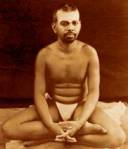
Sri Ramana Maharshi is one of my favorite teachers, and one of the greatest sages of the last century, a Buddha.  Although he was born in India, he was not a member of any particular religion.

Ramana Maharshi

Ramana Maharshi

“It was in 1908 that I first contacted Sri Ramana Maharshi, then in the Virupaksha Cave, when I was a boy of twelve. Had you seen him in those days, you would hardly have taken him for a mere human being. His figure was a statue of burnished gold. He simply sat and sat, and rarely spoke. The words he spoke on any day could easily be counted. He had an enchanting personality that shed a captivating luster on all, and a life-giving current flowed from him charging all those nearby, while his sparkling eyes irrigated those around him with the nectar of his Being.”

T.K. Sundaresa Iyer, At the feet of Bhagavan

T.K. Sundaresa Iyer, At the feet of Bhagavan

“At the age of sixteen Ramana Maharshi left his home, his family, and all he knew. He felt drawn to Arunachula – a small mountain in Southern India. He lived there for the rest of his life. His only possessions were a piece of cloth to cover himself, and a walking stick. Little by little word of a sage living alone on Arunachula mountain became known. Many felt drawn to sit in his presence. He seldom spoke. But occasionally he would respond to questions.

Sentient beings are in essence buddhas
It is like water and ice. There is no ice without water,
There are no buddhas outside sentient beings.
What a shame, sentient beings seek afar,
Not knowing what is at hand. It is like wailing from thirst
In the midst of water.

–Hakuin Ekaku, 1685-1768

Merry Christmas! | The Christ | Quotes

Celebrate with presence!

His disciples said to Him , “When will the kingdom come?”
And The Christ said: “It will not come by waiting for it. It will not come by a matter of saying ‘here it is’ or ‘there it is’! Rather the kingdom of the father is spread out upon the earth and men do not see it.”

“The man that takes to the plow and looks back is not worthy of the kingdom of heaven.” Luke 9:62

“Let thine eye be single and your whole body will be full of light”–Luke 11:34

“We must not wish anything other than what happens from moment to moment, all the while, however, exercising ourselves in goodness.”–St Catherine of Genoa

Jesus said: The seeker should not stop until he finds.  When he does find he will be disturbed. After having been disturbed he will be astonished. Then he will reign over everything.”–The Gospel of Thomas

“Pray and you will be condemned…”–Gospel of Thomas (14a)

“…Rather, the kingdom is inside of you, and it is outside of you. When you come to know yourselves, then you will become known, and you will realize that it is you who are the sons of the living father. But if you will not know yourselves, you dwell in poverty and it is you who are that poverty.”–Gospel of Thomas

“The Kingdom of God is within you.”–Luke 17:20-21

To the Scribes and Pharisees: “You who shut up the Kingdom of Heaven in men’s faces, neither going in yourselves nor allowing others to go in who want to.”–Mathew 23:13

Who of you by worrying can add a single hour to his life? Therefore do not worry about tomorrow,  for tomorrow will worry about itself. Each day has enough trouble of its own.” ~~Matthew 6:25-34

Kabir | A Poem

An interesting poem by Kabir:

“Friend, hope for the Guest while you are alive.
Jump into the experience while you are alive!
Think….and think….while you are alive.
What you call salvation belongs to the time before death.

If you don’t break your ropes while you are alive,
do you think ghosts will do it after?

The idea that the soul will join with the ecstatic
just because the body is rotten-
that is all fantasy.
What is found now is found then.
If you find nothing now,
you will simply end up with an apartment in the City of Death.
If you make love with the divine now, in the next life you will
have the face of satisfied desire.

So plunge into the truth, find out who the Teacher is,
Believe in the Great Sound.

Kabir says this: When the guest is being searched for,
it is the intensity of the longing for the Guest that does all the work.
Look at me, and you will see a slave of that intensity.”
—Kabir

Today’s quote: “Drop the “me” and there is Nirvana here and now”–Buddha